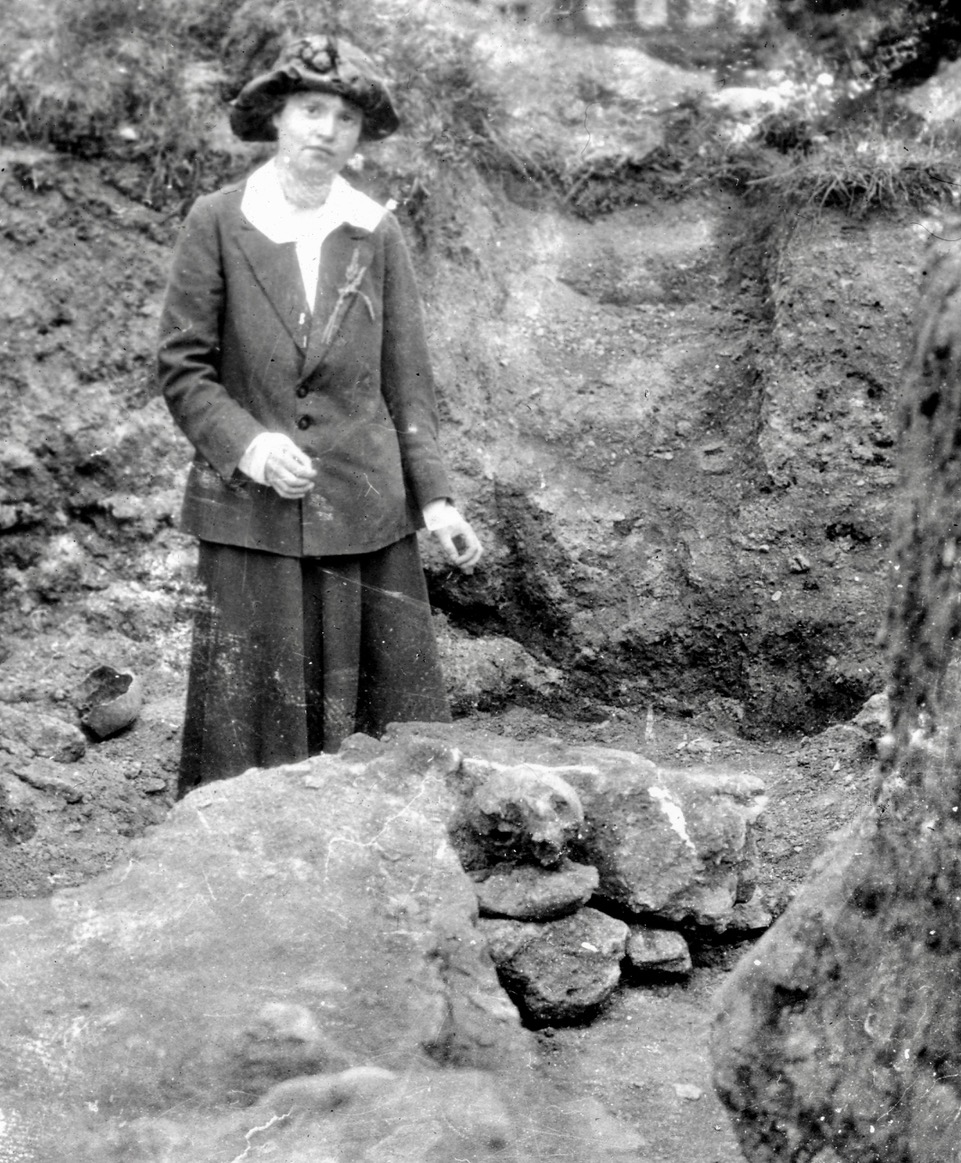
Abingdon New Cemetery in Spring Gardens occupies one of the highest points in Abingdon. Excavations, and finds made during grave-digging, show that this site was used in many periods: Mesolithic, Neolithic, Bronze Age, Iron Age, Roman and Saxon.
Important discoveries included the site of a rare Bronze Age timber circle, probably a ceremonial monument of some kind.
Bronze Age burials, part of an Iron Age village and a Roman well and fields were found in an excavation in 1974-76, before the Nuffield Way industrial estate was built. An unusual find was part of an early kind of plough, known as an ard, made of wood. This was preserved in a Roman well.
Excavations in 1972 to 1976, before the Daisy Bank housing esate was built, discovered an Iron Age enclosed farmstead, a Roman villa and Anglo-Saxon buildings and burials.
The Roman villa was probably the centre of a farming estate which extended as far as the River Thames.