The remains of a Roman temple, possibly preceded by an Iron Age shrine, were found in excavations before the Old Gaol flats were built.
Ditches which may be medieval property boundaries, and medieval pits and later structures, were also found.

The remains of a Roman temple, possibly preceded by an Iron Age shrine, were found in excavations before the Old Gaol flats were built.
Ditches which may be medieval property boundaries, and medieval pits and later structures, were also found.
Foundations of a Roman building were found when the Railway Inn site was being developed in 2002.
The building had been built over the infilled defensive ditches of Abingdon’s Iron Age ‘oppidum’. Medieval and later features were also found
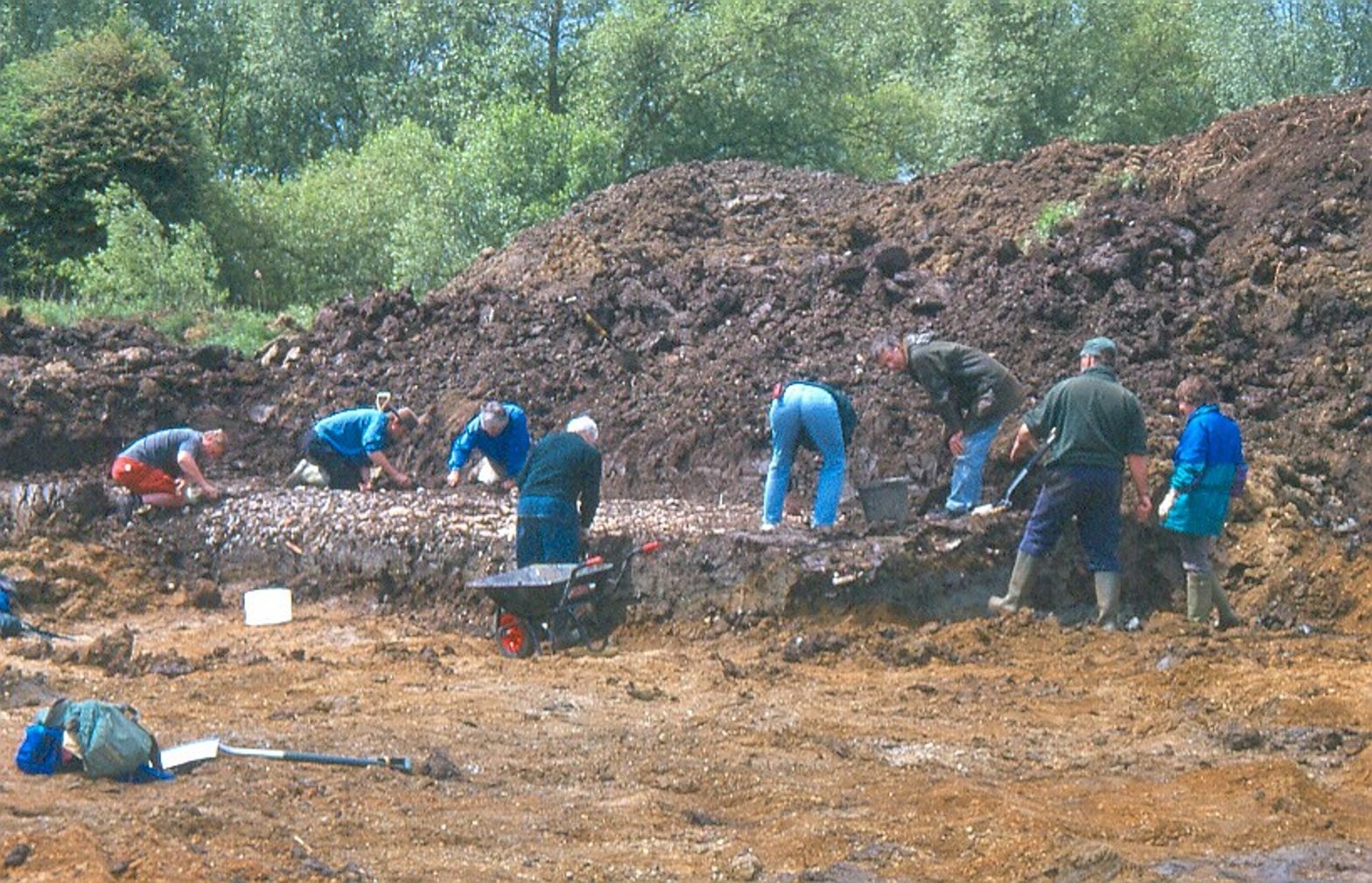
Salvage excavations in a gravel quarry found remains of two Iron Age stone causeways, crossing a filled-in former river channel.
Much animal bone, and some human remains, were found.


An excavation on the site of the New Abbey House Council offices found Iron Age houses, a Roman building and stone-lined well, Roman skeletons in lead coffins, Saxon buildings, features relating to Abingdon abbey including the cemetery where townspeople were buried, and a previously unknown cemetery from the English Civil War.
At a depth of nearly 2 metres below the modern pavement, an excavation beside the County Hall for a lift shaft found remains of Iron Age buildings.
Above these was a Roman road with wheel ruts in it. It had been resurfaced with gravel several times. In medieval times, the site seems to have been been open land, part of Abingdon’s Market Place.
Early Bronze Age pottery, traces of Iron Age occupation, an early Roman building, and medieval and later pits and refuse dumps were found in an excavation in the gardens of Twickenham House in 1987.
Human bones which may have been anatomical specimens belonging to a 19th century surgeon who had lived there were also found.
An Iron Age and Roman farm was excavated before a housing estate was built here.
A minor Roman road, heading towards the centre of Abingdon, was also found, as well as some Bronze Age pits.
Salvage excavations while building work was taking place here in 1977 to 1978 found a Roman cremation burial with a pottery flagon, a human burial which was probably prehistoric or Roman and a medieval kiln, possibly for malting. Other ditches and pits which may have been Iron Age or Roman were recorded.