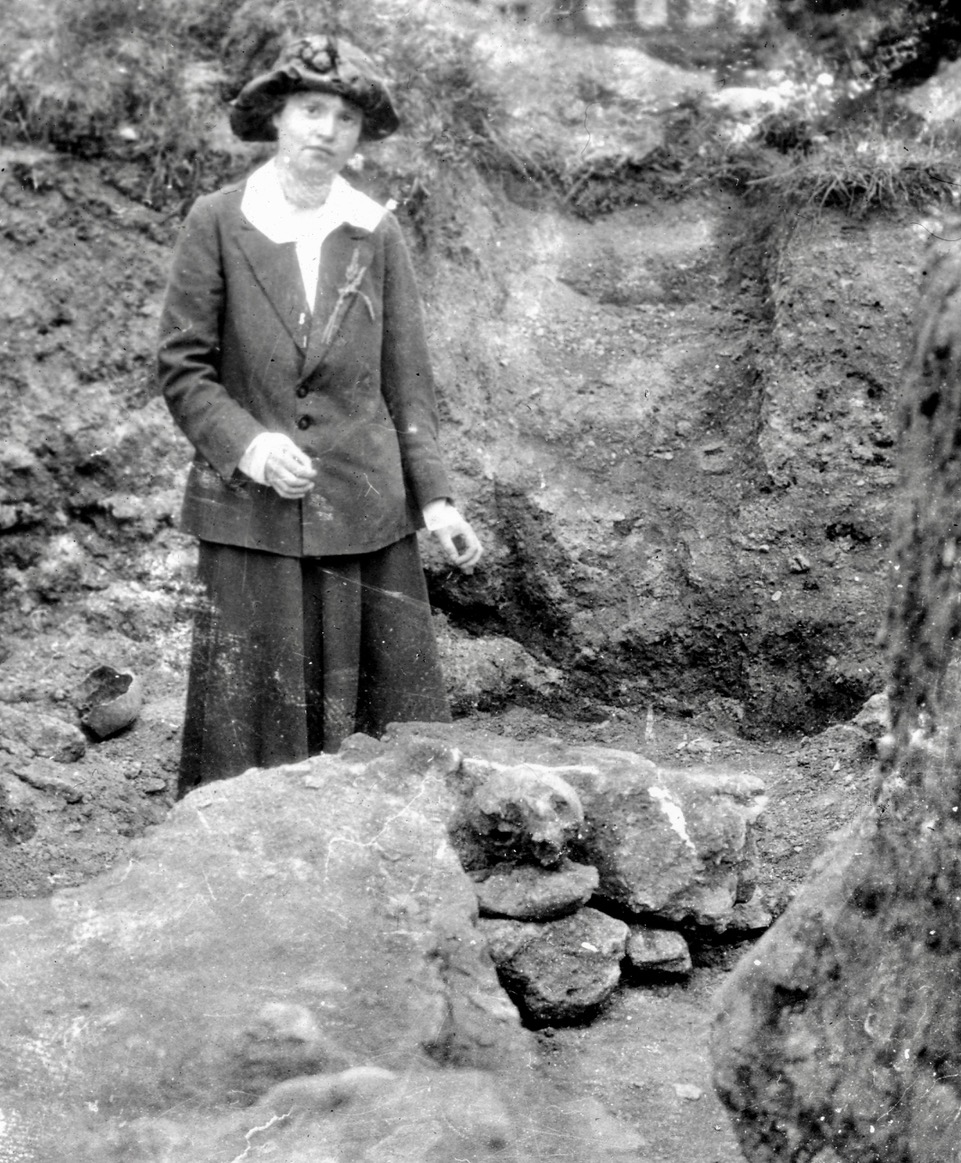
Remains of a medieval tannery were found in excavations at 75 Ock Street in 1999, before the site was developed for housing.
Roman ditches, and medieval remains mainly of the 11th to 13th centuries were also found. These included foundations of at least three buildings close to Ock Street, and many rubbish pits.
One of the most important excavations in Abingdon took place in the early 1980s at what is now Gardiner Close and Eason Drive.
A Neolithic barrow, several Bronze Age barrows and burials, a Roman cemetery and an Anglo-Saxon village were excavated. Some of the earliest metal objects from the British Isles (three small copper rings, dated to about 2500 BC), was found in this work.
Abingdon New Cemetery in Spring Gardens occupies one of the highest points in Abingdon. Excavations, and finds made during grave-digging, show that this site was used in many periods: Mesolithic, Neolithic, Bronze Age, Iron Age, Roman and Saxon.
Important discoveries included the site of a rare Bronze Age timber circle, probably a ceremonial monument of some kind.
Bronze Age burials, part of an Iron Age village and a Roman well and fields were found in an excavation in 1974-76, before the Nuffield Way industrial estate was built. An unusual find was part of an early kind of plough, known as an ard, made of wood. This was preserved in a Roman well.
Fragments of a decorated Islamic glass beaker, made in Cairo in about 1250 AD were found in an excavation by AAAHS in 1983.
The beaker is is decorated with an inscription which says ‘Glory to Our Lord the Sultan’, and a horseman with polo sticks.
The beaker was found in a pit of the 15th century, about two hundred years later than the beaker was made. It is not known how or exactly when the beaker came to Abingdon.
The work was in the cellar and back garden of a medieval house which was being redeveloped. Roman and medieval remains were also found.