Fragments of a decorated Islamic glass beaker, made in Cairo in about 1250 AD were found in an excavation by AAAHS in 1983.
The beaker is is decorated with an inscription which says ‘Glory to Our Lord the Sultan’, and a horseman with polo sticks.
The beaker was found in a pit of the 15th century, about two hundred years later than the beaker was made. It is not known how or exactly when the beaker came to Abingdon.
The work was in the cellar and back garden of a medieval house which was being redeveloped. Roman and medieval remains were also found.
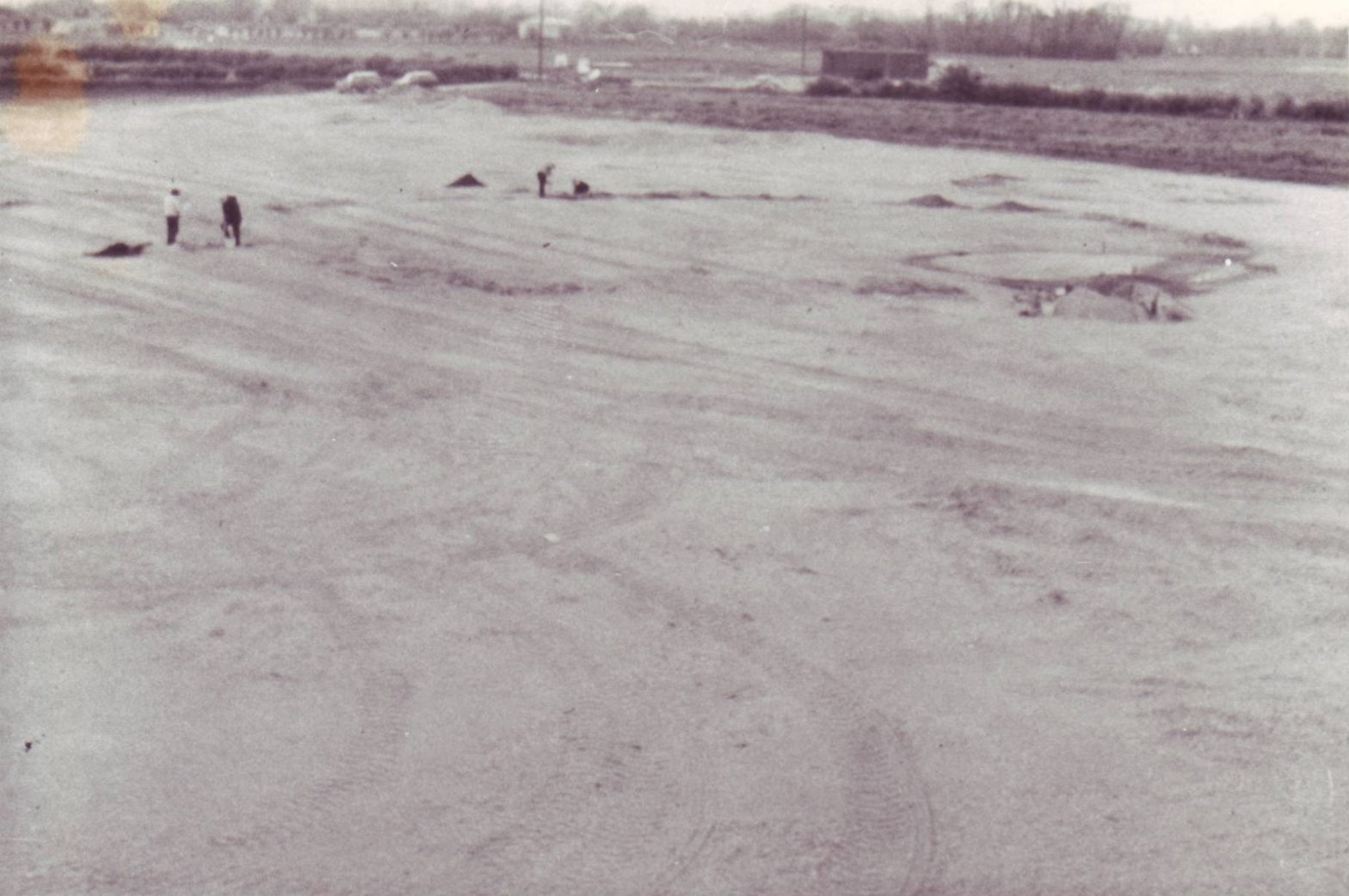
Between 1970 and 1973, rescue excavations were carried out by Abingdon’s Archaeological Society in gravel pits at Wilsham Road. Part of the area is now Abingdon Marina.
Discoveries included Bronze Age barrows, a Bronze Age farm, a Roman trackway and enclosure and early Anglo-Saxon buildings. These buildings may be linked to the large Anglo-Saxon cemetery at Saxton Road.
Anglo-Saxon bone carving of a fish, about 6.5 centimetres long (c) Simon Blacmore
Excavations in 1972 to 1976, before the Daisy Bank housing esate was built, discovered an Iron Age enclosed farmstead, a Roman villa and Anglo-Saxon buildings and burials.
The Roman villa was probably the centre of a farming estate which extended as far as the River Thames.
Small excavations in 1968 and 1970, when the houses on Masefield Crescent were being built, found traces of Roman buildings.
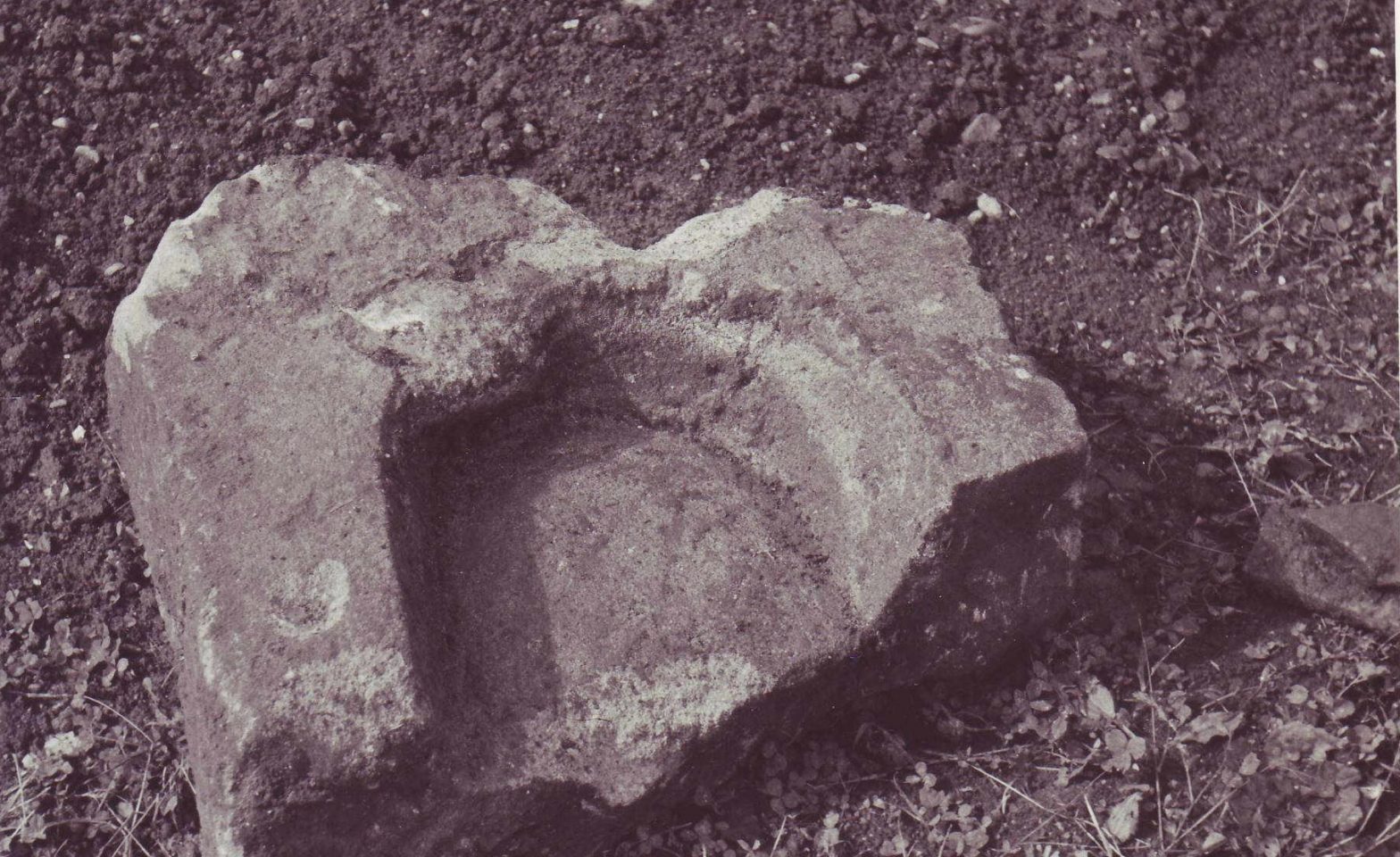
Much pottery, coins, roof tiles, pieces of painted wall-plaster and part of a stone column were found. The site may have been a Roman villa.
Lid of Roman stone coffin, or sarcophagus, found near site of Roman building. Now on display in Abingdon Museum. (c) AAAHS
Pieces of decorated Roman tableware (‘Samian Ware’) found in excavations at Tithe Farm. (c) S Blackmore
Newspaper cutting about excavations at Tithe Farm. North Berks Herald, 10 October 1968
Photograph of foundations of Roman building found at Tithe Farm in 1968. The building had a pillar made of large tiles set against one wall (centre of photo). (c) AAAHS
Pieces of Roman roof tiles from Tithe Farm excavations. Semi-circular tiles were placed over the ridges on the edges of rectangular tiles (seen in the photo) to make a rain-proof roof. (c) S Blackmore
Trench excavated at Tithe Farm Roman building by the Abingdon and District Archaeological Society (now Abingdon Area Archaeology & History Society) in 1968. (c) AAAHS
Members of the Abingdon and District Archaeological Society (now Abingdon Area Archaeology & History Society) at the Tithe Farm excavation in 1968. (c) AAAHS